Wound management for care teams
Wound care, from first sign to healing.
WoundLane brings skin concerns, wound assessments, photos, treatment plans, daily care, specialist review and clinical oversight into one connected workflow, so every shift knows what has been done and what comes next.
No account needed Synthetic residents only Resets automatically

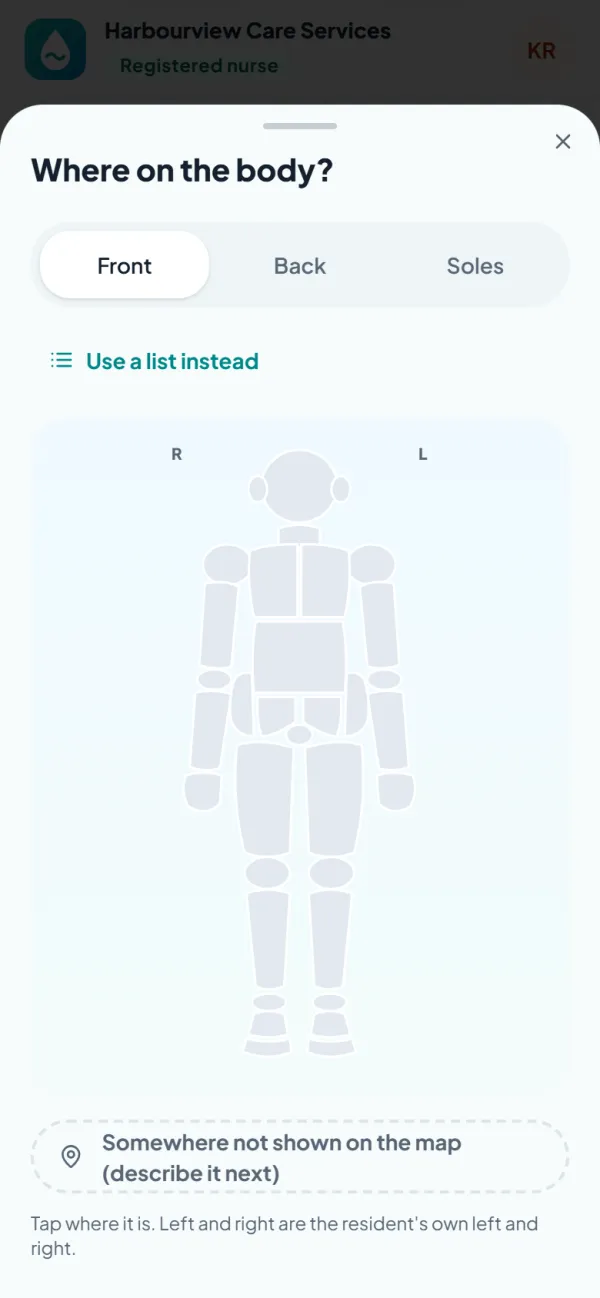
Screens from the WoundLane demo, with synthetic residents.
Wound information shouldn’t live in six places.
The story of a single wound is often spread across progress notes, photos on someone’s phone, paper forms, spreadsheets, treatment charts and verbal handover. Nobody sees the whole picture until someone has to chase it.
WoundLane keeps it together: one record per wound, from the first concern to healing, that everyone involved works from.
How WoundLane works
One continuous workflow, not six separate modules.
Each step feeds the next. What was noticed becomes the assessment, the assessment shapes the plan, the plan becomes today’s care, and progress is visible to the people who need to see it.
-
1
Spot a skin concern
Anyone on shift reports a concern in seconds and marks where it is on the body map.
-
2
Assess
A guided wound assessment with photos and measurements, one clear step at a time.
-
3
Create the wound plan
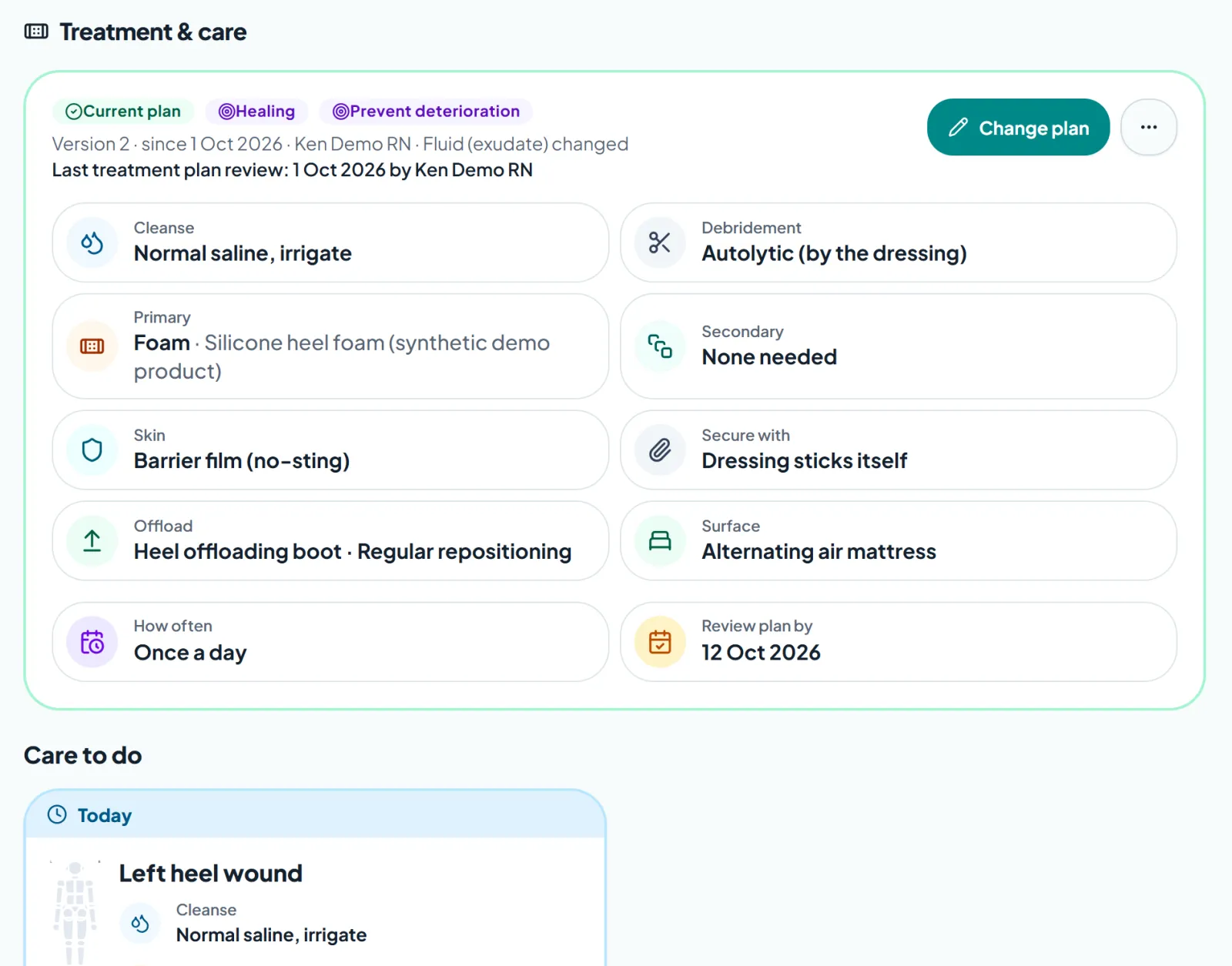
Cleansing, dressings, offloading and frequency in one structured plan, versioned when it changes.
-
4
Deliver care
The plan becomes a care schedule. Staff record what was done and what was used.
-
5
Track progress
Photos stay with the wound in order. Size, wound bed and trend show how it is going.
-
6
Review & oversee
Wound clinicians review referrals; managers see what is overdue and what needs attention.
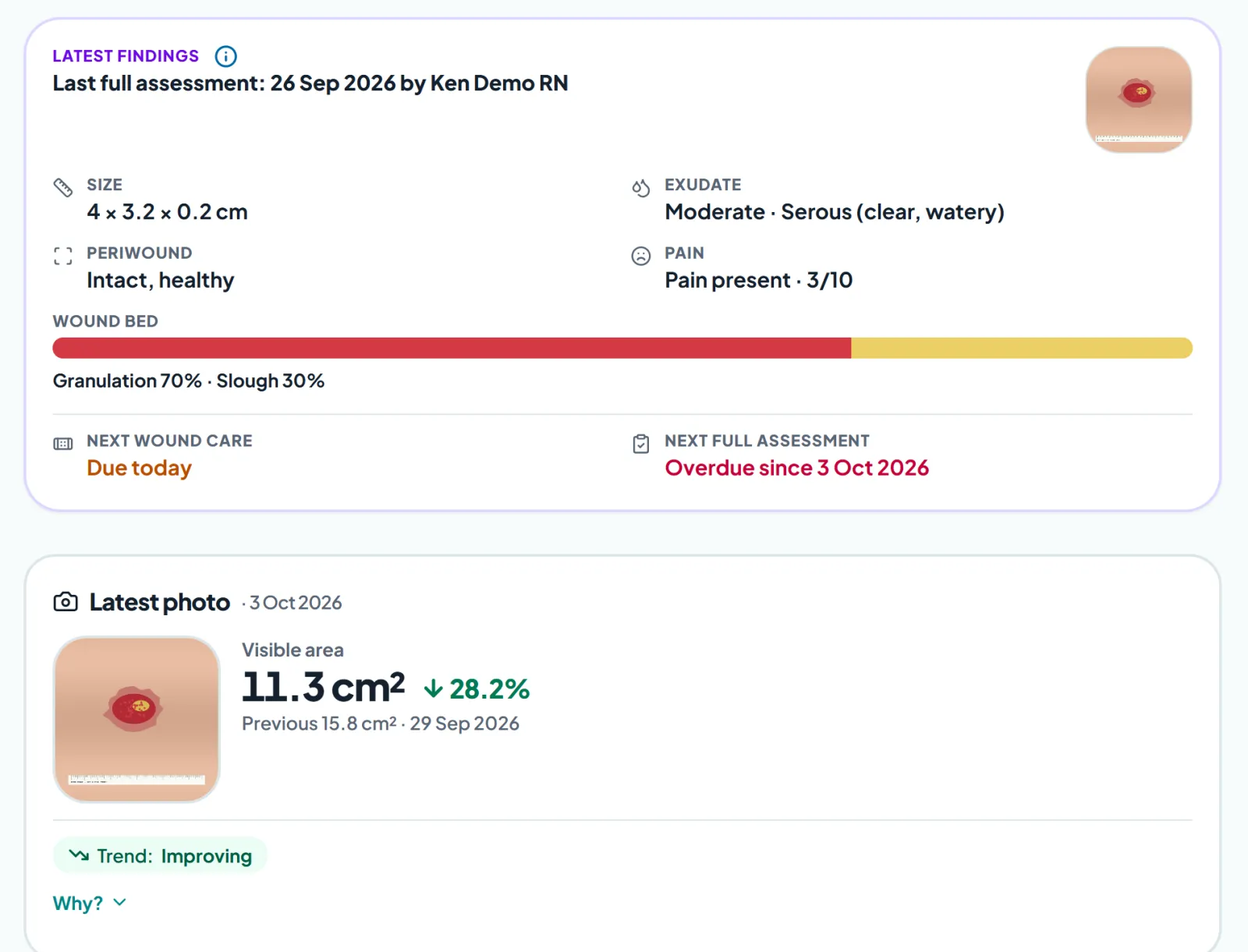
Every wound has one page.
Where it is, the latest findings, photos in the order they were taken, the current plan, every piece of care given and who reviewed it. Open it on a phone at the bedside or a desktop in the office.
View DemoFor teams
Built around the people who do the work.
Nurses and care staff
Know what needs doing, and get it done quickly.
- Today shows the residents and wounds that need attention, with one tap to start.
- Quick skin assessments on an interactive body map.
- Wound photos taken in WoundLane and stored securely with the wound.
- Comprehensive wound assessments, guided step by step, with clinical guidance where you need it.
- Structured treatment plans that become a clear care schedule, and a full care history.
- Mostly taps and choices: minimal typing.
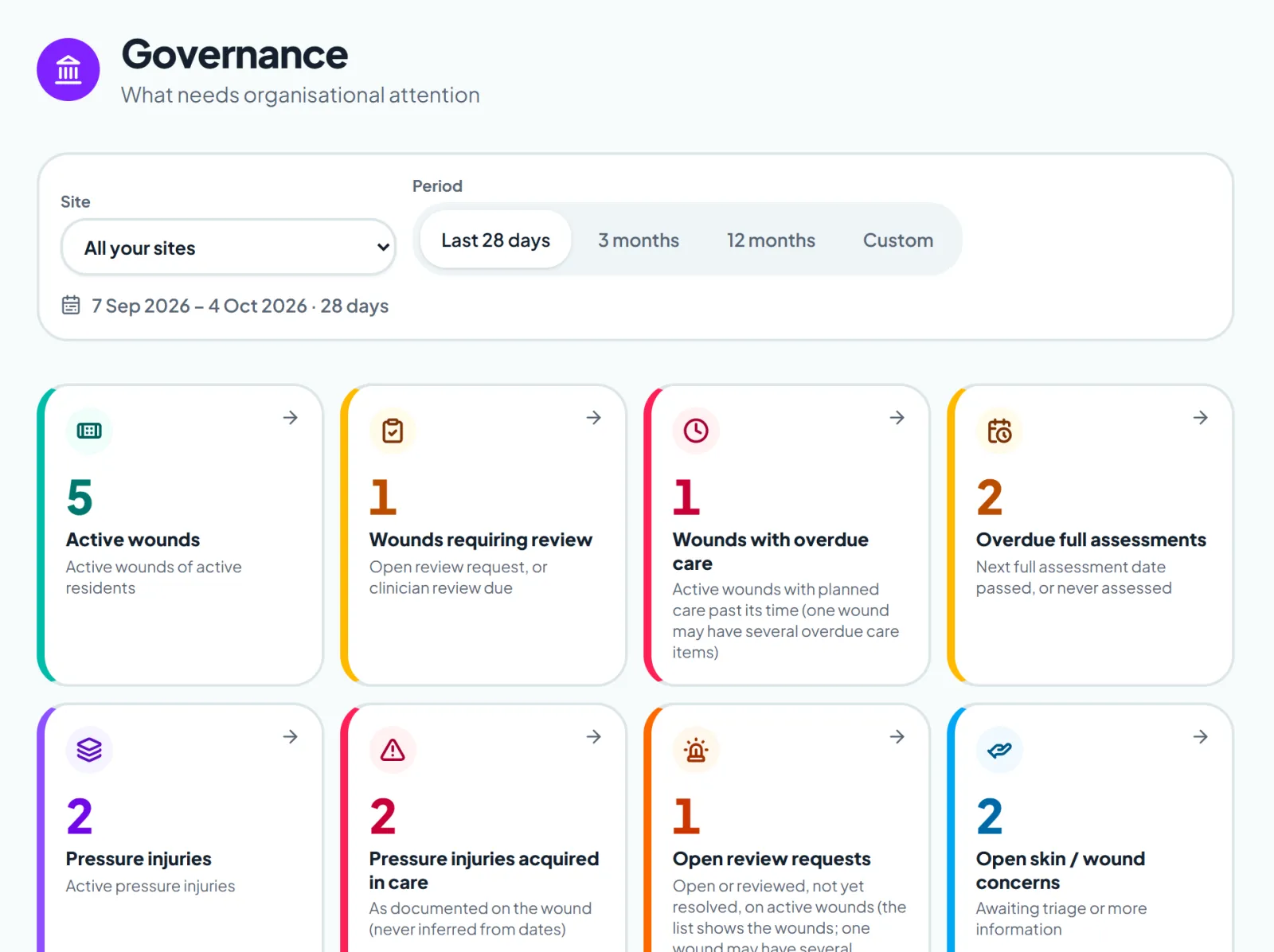
Clinical managers
Know what needs attention without chasing paperwork.
- Wound oversight at a glance: active wounds, reviews due and open concerns.
- Overdue care and overdue assessments, before they are missed again.
- Pressure-injury visibility, including injuries documented as acquired in care.
- Wound registers, governance reports and exports, with trends and full history.
- An audit trail of who did what, and every site you are authorised to see.
Wound clinicians
Focused specialist review, with the history in front of you.
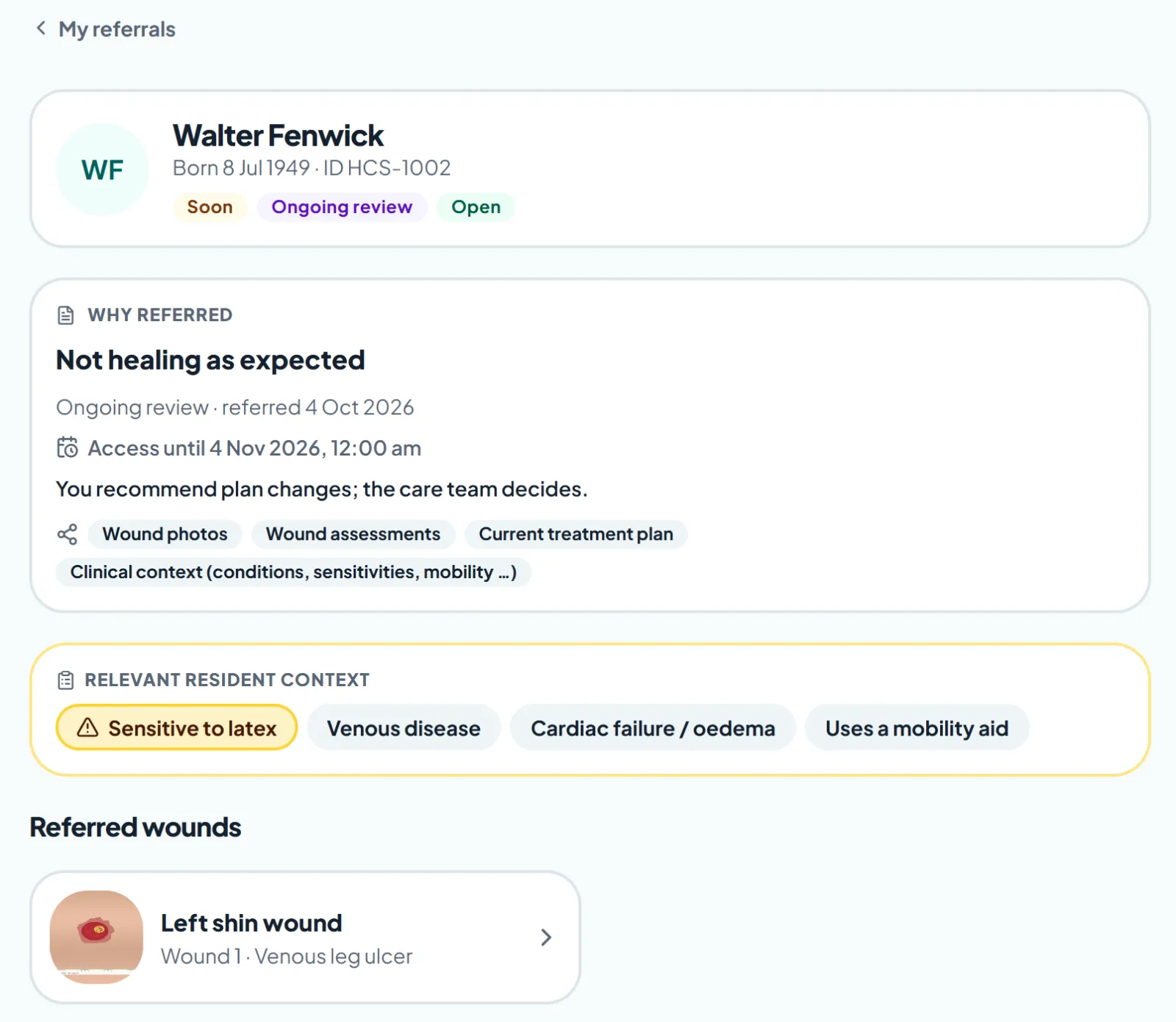
- Referrals arrive with the reason, photos, assessments and the current plan.
- External clinicians see only the residents and wounds referred to them, and only until access ends.
- Recommend plan changes, or update the plan directly where the organisation grants it.
- Ask the team for new photos or more information.
- The wound’s full history, so every review starts from the whole picture.
Try WoundLane yourself
Explore a complete synthetic care environment, with residents, wounds, photos, plans and care history already in place.
- No account required
- No real resident information
- Changes reset automatically
Choose a perspective
-
Registered nurse
Today’s work, wound assessments, photos and care.
-
Clinical manager
Governance, registers, reports and clinical settings.
-
Administrator
Sites, team and organisation settings.
-
Wound clinician
Specialist review, referrals and treatment plans.
Inside the demo you can switch to any other role, such as enrolled nurse or support worker.
Pricing
One plan. Your whole team.
One price per organisation: unlimited users and unlimited sites, with no per-user or per-site fees.
WoundLane Core
Unlimited users · Unlimited sitesA$199 /month + GST
per organisation
- Unlimited users: your whole team, every role
- Unlimited sites: every home, facility and service area
- The complete wound-management platform
- The clinical assessments included in the platform
- Secure wound photography
- Care scheduling and care history
- Specialist referral and review workflow
- Governance, registers and reporting
- Support and onboarding
Try the demo first; you can subscribe from inside it when you are ready. Billed monthly. Cancel from Billing at any time: access continues to the end of the paid month, and your records stay readable and exportable.
Need enterprise support, integrations or a tailored rollout? Talk to us
Security and privacy
Built for sensitive clinical information.
Wound photos and care records are health information. This is how WoundLane protects them.
-
Role-based access
Each person sees and does only what their role allows, for the sites they cover. The server checks every request.
-
Organisation isolation
Every organisation’s records are kept separate in the application and enforced again in the database.
-
Private clinical photos
Wound photos are shown only through short-lived, signed links checked against the viewer’s access. Each stored image keeps a fingerprint, so substitution can be detected.
-
Audit history
Sign-ins, refused access and changes are kept in an append-only audit trail.
-
Clinical history is kept
Clinical records are never deleted. Corrections are recorded alongside what was originally written.
-
Two-factor protection
Two-factor sign-in is available to every account, and required for sensitive WoundLane platform operations.
-
Your records stay yours
Registers and notes can be exported. If a subscription ends, records stay readable and exportable.
-
Supports clinical judgement. Never replaces it.
WoundLane organises what your team observes, measures and plans, and shows what is due. It does not diagnose wounds or make treatment decisions: those stay with your clinicians.
See WoundLane in action.
See the real product with synthetic residents. When you are ready, bring WoundLane to your organisation from inside the demo.